
TripAdvisor has revealed to have him sentenced companies specialized in the sale of fake reviews. According to its founder, with this sentence 9 month in prison for the manager of the company in question, it would even be a “historical turning point” pour TripAdvisor…
When we know that 76% of travelers finalize their choice to book this or that establishment based on the reviews that are written about it, we understand better that some are tempted to multiply the “good reviews” on their TripAdvisor account even if they are completely false ! And for that, failing to write them yourself by creating a bunch of fake email accounts, there is nothing simpler than using companies specialized in writing fake reviews.
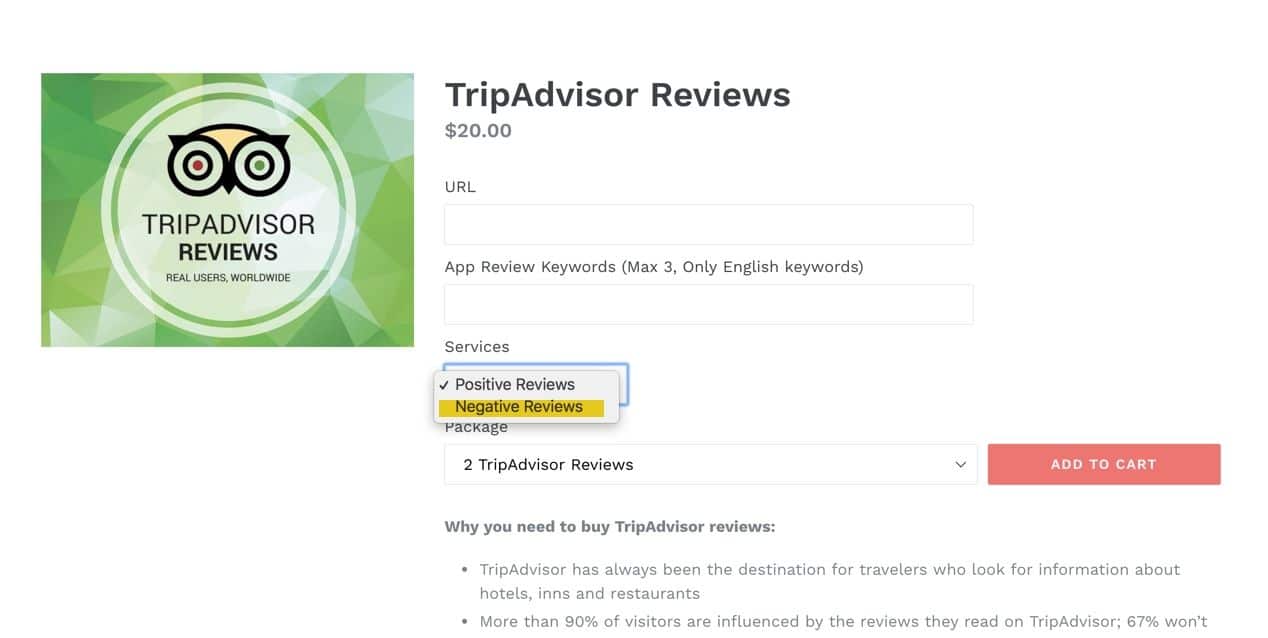
On this site, we might as well buy vouchers (faux) only bad reviews (faux) reviews for “plumb” the rating of its competitor, par exemple.
Last week's judgment which sentenced 9 month in prison for the manager of an Italian company specializing in the trade of “fake review” is a first (regarding the prison sentence) for TripAdvisor which has considerably stepped up its fight against these companies. Since 2015, American society has already condemned 60 companies face very high fines. It must be said that for the global giant, fake reviews call into question its credibility and therefore, to a certain extent, son business.
300 people mobilized
The hunt for fake reviews has therefore taken on a new dimension with the widespread use of lawsuits brought by the online travel giant.. These criminal attacks come following drastic measures taken by TripAdvisor to spot fake reviews because, according to internal sources, this scourge would affect 5 à 7% reviews published.
When we know that he is stationed – every minute and everywhere in the world – a few 190 reviews on the TripAdvisor platform, we can quickly measure the volume of fake reviews that flood its pages …
Last year, TripAdvisor has developed special software that relies on 50 filters and crosses 300 elements of assessment to report suspicious reviews. Ensuite, these are close to 300 people who detail these opinions to decide, in the end, whether they are false or not. To identify a fake review, TripAdvisor checks the IP address of the person who posted it, its geolocation, the terms used and compound expressions … At the crossroads of this data, the artificial intelligence of its “robot censor” immediately reports suspicious notices to human controllers. Ensuite, TripAdvisor sleuths “go back” the sector to see if the false review is the work of a solitary hotelier or that of a perfectly well organized company to “industrialize” what a service.
TripAdvisor is aware that the system does not filter everything but its objective remains to limit “fake review” under the bar 10%; which is still very high.
And Google in all this ?
In addition to the actions carried out by TripAdvisor, each professional can initiate proceedings themselves if they suspect (and has the proof) a competitor to write false reviews about him. In addition to the European Directive 11 May 2005 (n° 2005/29 on unfair commercial practices) which allows you to counter “sponsored content not identified as such, such as “falsely representing oneself as a consumer”, there is also article L121-1 of the Consumer Code which can convict the guilty party up to 2 years of imprisonment and 37 500€ fine.
In his latest press release, Steve Kaufer, the founder of TripAdvisor, calls on tourism professionals to denounce the companies that approach them to sell them “fake review”: since last week, the address paidreviews@tripadvisor.com is open to all.

If TripAdvisor's efforts are commendable – and each establishment that has been the victim of false negative reviews knows this well – it nonetheless remains true that Google would be well inspired to do the same.
En effet, since last year, the Californian giant has become the leading collector of opinions in the world even before TripAdvisor when it comes to the world of travel and leisure.

Déjà, many purchases of fake reviews on Google are flourishing on the market (strangely, they are more difficult to find when typing “buy reviews Google” …) and the phenomenon seems to be increasing. Google, however, indicates that it has created numerous safeguards : when fake reviews are detected, the site in question is downgraded in its ranking … enough to discourage certain professionals from multiplying false reviews. Car, in this case, they will have to choose between good (faux) reviews and good SEO …
Thomas D.
Source: https://blog.elloha.com/2018/09/15/sale-temps-pour-les-faux-avis/