
The French CEO still too often reluctant to use LinkedIn, Facebook or Twitter to communicate, whether as a spokesperson for their company or as an individual.
 At a time when social networks are now systematically taken into account in the company's communication system, the question of leaders speaking out on these participatory channels is emerging. Should bosses express themselves directly or can they leave this delicate exercise to their communications department and stay at a safe distance from their audiences? ?
Overview of practices on different sides of the Atlantic
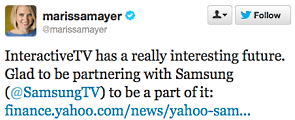
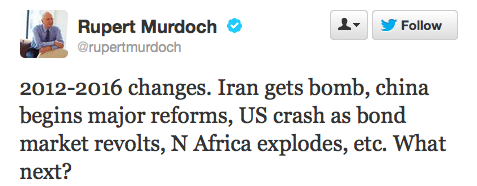
Contrary to popular belief, the reluctance of managers to integrate social networks into their communication is not the prerogative of the French. En effet 70% of the CEO of the 500 largest American companies and 85% CAC40 bosses are absent from Twitter. It is in the media sector or companies specializing in the web that the differences in usage between French and Americans are most obvious. Indeed, even if these French bosses are more present on Twitter than their colleagues in other sectors (like the industry), their use of this channel remains sporadic compared to that of their Anglo-Saxon counterparts (Mark Zuckerberg, Marissa Mayer or Rupert Murdoch encore). Let us nevertheless note the Twitter accounts of Alexandre Bompard (CEO of FNAC) or Serge Papin (President of the Système U cooperative) as good French examples.
Why such reluctance ?
It is therefore clear that there is a real gap between the presence of brands on social networks and the speeches of their leaders on these same media.. Faced with this observation, how can we explain the “silence” of the bosses ? A study carried out in May 2012 by CEO.com and Domo reports three levels of reluctance expressed by bosses : age (a form of discrepancy between the “youngness” of the tools and the more traditional communication habits of managers), time (engaging in a discussion process on social networks requires a certain assiduity which is often not compatible with the bosses’ agenda) and to finish, fear (the fault which could trigger a crisis or strong turmoil for the company as a whole).
Embodying the company through online speaking engagements
Faced with these fears expressed by leaders, what opportunities have been identified today that could tip the scales in favor of executives speaking out on these participatory tools? ? Figures from individuals on social networks show real enthusiasm (1 billion active users on Facebook, plus de 7 millions of Twitter profiles, 4 billions of videos viewed every day on YouTube). A study carried out by Razorfish, Econsultancy.com and SocialMediaToday.com highlight the interactions that exist between brands and their audiences : 53% of respondents follow between two and five brands on Facebook, et 45% of respondents registered on Twitter who follow a brand also buy its products. The brand/Internet user relationship is therefore undeniable. In this configuration, the role that the manager can have in expressing himself on the web is now being asked.
From an external communications point of view, the social web has introduced many upheavals for the company. In addition to corporate speaking engagements, the intervention registers have expanded and the organization communicates on multiple themes which highlight its DNA, its values. More and more, the company is embodied in the minds of its audiences. The role of the manager is essential in this process. Evoking “the man” can also refer to the product. Michel-Edouard Leclerc, Steve Jobs or Xavier Niel are some examples. This relative proximity, coupled with a request for authenticity, can lead managers to have to discuss their interests, their values and positions on certain subjects.
Personal speaking or corporate incarnation ?
The subject of personal expression of leaders is a very particular approach. It probably does not concern all the actors, because it is a binding choice of a man or a woman in civil society. Rupert Murdoch (PDG de News Corp) uses Twitter in this sense and shares with its 362 000 followers professional information and views on social issues. This is also what Henri de Castries believes, PDG d’Axa, when he declared in L’Express : “I think that as a business leader, we can also contribute to the debate, while remaining in his role. » Social networks allow these bosses – from SMEs or large groups – to speak out and assert their personal point of view on social issues.
The manager's engagement on social networks is also a business lever. En effet, “listening” and analyzing the conversations of Internet users-consumers about the brand’s products is a way to constantly innovate and stay close to their expectations.. The BRANDfog study entitled “CEO, Social Media and Leadership Survey » (“CEO, social media and management ») and carried out in 2012 reports that 93 % of respondents believe CEO engagement on social media helps communicate company values, structure its reputation and assert its leadership in times of crisis.
When a leader’s words on social networks resonate internally
From an internal point of view, expressing yourself on social networks is a direct and inexpensive way to get closer to your colleagues, themselves increasingly present on these media. It is also a strong indicator regarding the employer brand. The BRANDfog study shows that 94% of respondents believe that the participation of the CEO and management team on social media improves the image of the company. In a competitive market, attracting and retaining talent is also a challenge, the “social” commitment of managers is, pour 78% of respondents, a lever of attraction for a company. It is a way to share values and enhance the feeling of pride in belonging to the same company..
Tools available to managers : codes et usages
Bosses who wish to express themselves on social networks have, according to the CEO.com and Domo study, of four supports : profile on LinkedIn (26% of leaders), a Facebook page (7,6%), a Twitter account (3,8%), a blog (1,2%).
The LinkedIn profile is the “showcase” of the manager’s career and network. It is therefore more suitable for personal communication than for a company spokesperson speech.. A Twitter account and/or a blog are media better able to convey the words and points of view of the manager as such. In the same way as a newsletter or an internal journal, each of these tools must be animated according to an editorial line defined upstream. If strictly professional use is defined, it is imperative to keep it. For professional and private use, we must pay attention to the homogeneity of speeches. Marissa Mayer's Twitter account (CEO of Yahoo) is a good example to follow.
The blog, like the Twitter account, makes the words of leaders public, management rules must therefore be stated (opening blog posts to comments, answers to questions from Internet users on Twitter…) It’s a new way to enter into conversation with your audiences, which requires time and real involvement on the part of the manager and the teams who support him on a daily basis.
Towards a more “conversative” future
The paradox we are going through, strong presence of brands on social networks and reluctance of managers to integrate these new tools, is probably a “parenthesis” which will only be closed with training and education for managers and their operational teams. There is no doubt that the initiative of Nicolas Bordas (President of TBWA France) to start a Twitter account, @TweetBosses, which relays the tweets of certain big French bosses, lays the groundwork for reflection on the era of digital communication for managers and will create emulation and a certain “competition” between French bosses. Interactions, integrity and regular communication with opinion leaders are the qualities of a good, connected leader. For good management of speeches on these new tools, internal processes must be initiated, in a manner similar to “media training” which prepares for interviews in high circulation daily newspapers.
In this article, we mainly talked about the bosses and management teams of large groups, but speaking out on social networks is not reserved for this circle. Each boss has complete freedom to express themselves on the web, it can even be a window of opportunity for bosses who are usually little publicized !
source http://pro.01net.com/editorial/